MALMESBURY IN THE CIVIL WAR
The dispute between Parliament and King Charles I erupted into armed conflict in the summer of 1642. London sided with Parliament and the King set up a rival capital at Oxford. Malmesbury and other Wiltshire towns supported Parliament whereas Devon and Cornwall raised a strong army in support of the King.
Malmesbury was directly involved in the English Civil War and at the outbreak of the war the Parliamentary Committee for Wiltshire met there. The town had an importance out of proportion to its size owing to its position on the main route between Oxford and the West of England.
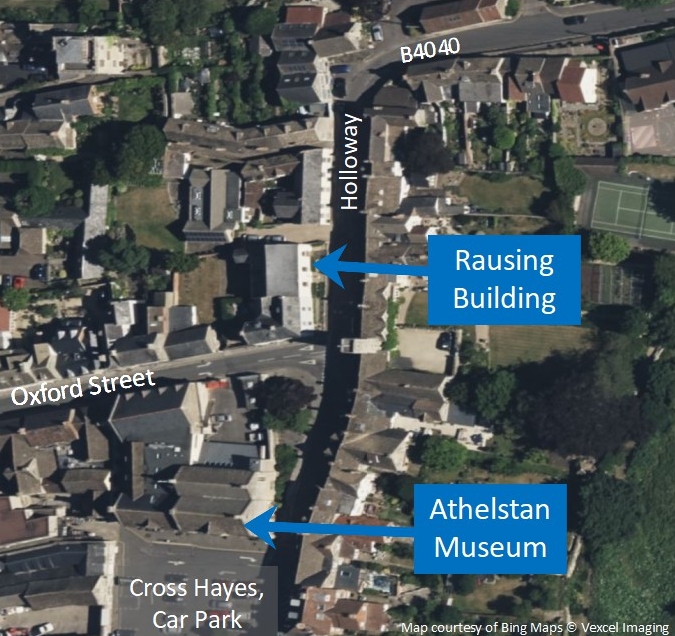
The town and its population saw two battles and countless skirmishes. During the war it changed hands no less than six times. There is still physical evidence of the battles for control of the town:
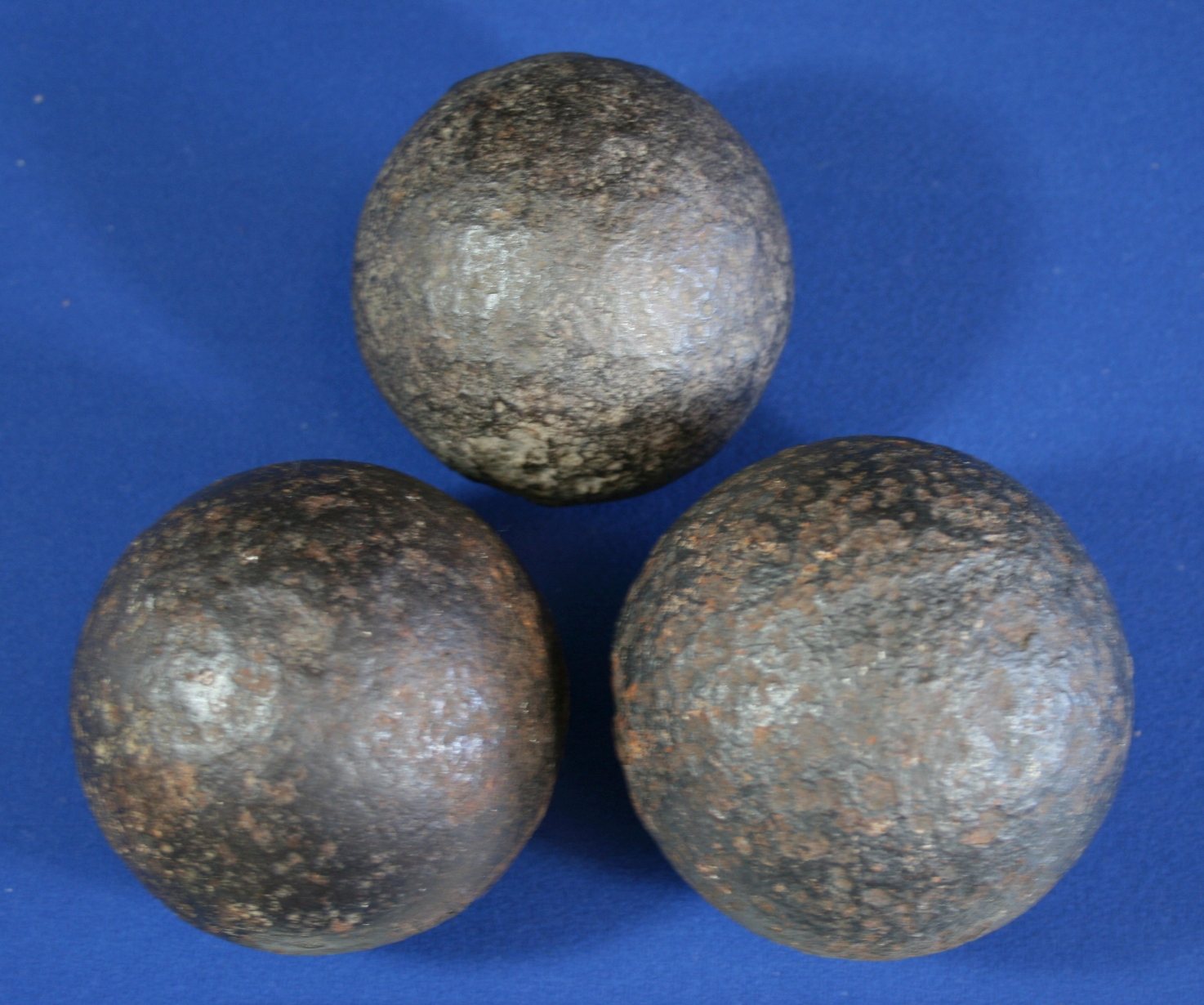
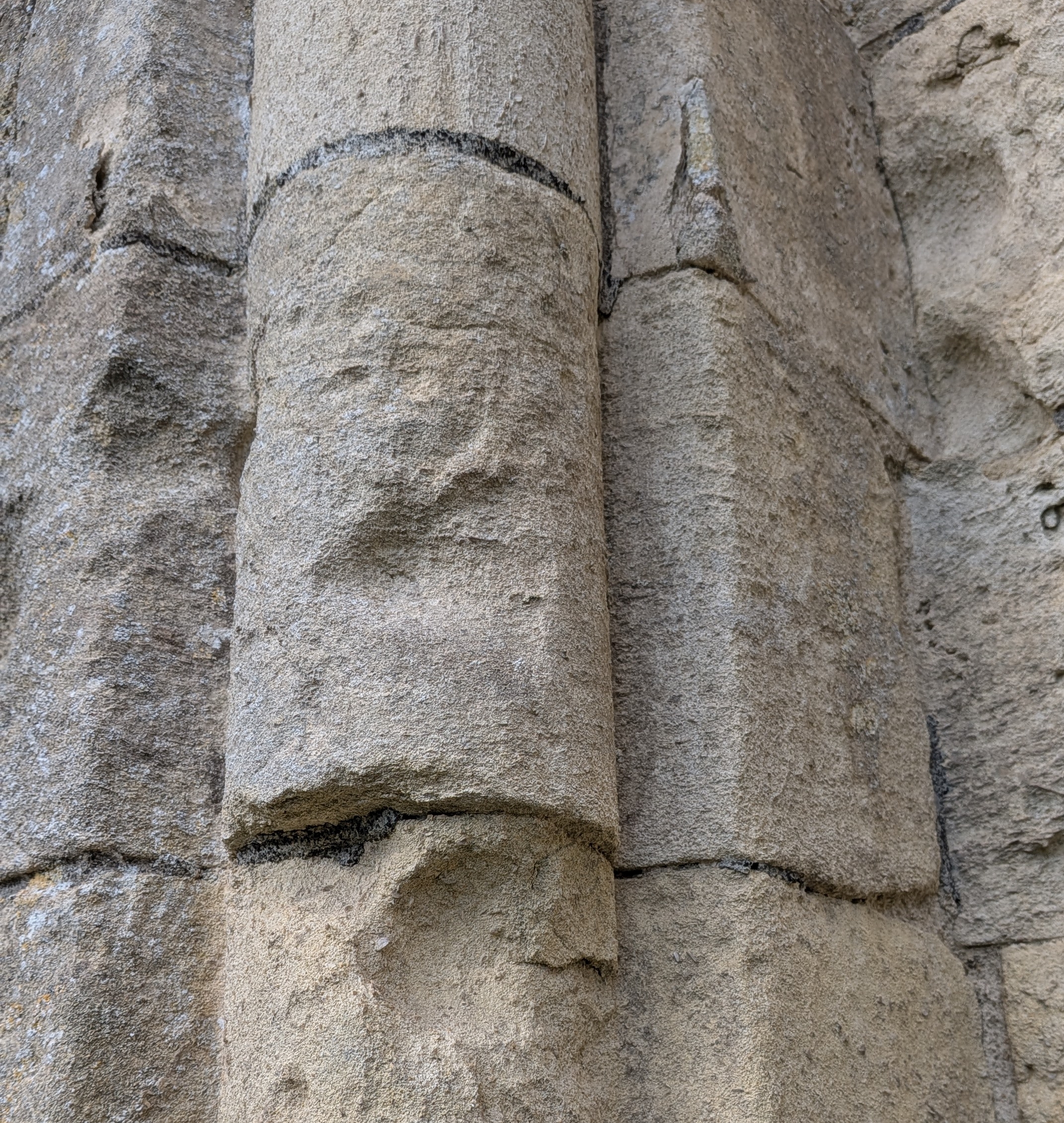
The people of Malmesbury had to feed, pay and house both the Parliamentary and the King’s soldiers for most of the time from 1642 to 1646. When the town was not occupied by an army its people were subject to taxing raids by both the Roundheads and the Cavaliers. The museum’s collection contains a manuscript in the form of a petition of complaint concerning the treatment of the inhabitants during this period.
Who controlled Malmesbury?
Date
What happens?
Who is in control?
Click the buttons below to read more
Summer 1642
Parliament
December 1642
Parliament
January 1643
Parliament
January 1643
Parliament
February 1643
Parliament
3rd February 1643
The King
22nd March 1643
Parliament
24th March 1643
Parliament
25th March 1643
The King
April 1643
The King
May 1643
Parliament
21 July 1643
The King
August 1643
The King
25th May 1644
Parliament
Colonel Devereux is appointed Governor until the end of the English Civil War in October 1646 when the King is captured. King Charles I is executed on 30 January 1649.
The Enemy Within
When war started Parliament decided to put Edward Bayntun and Edward Hungerford at the head of its troops in Wiltshire. There seemed to be great jealousy between the two of them which culminated in an open fracas at Malmesbury in January 1643.
Bayntun had been put in charge of Malmesbury and Devizes whilst Hungerford based himself at Cirencester. In an apparent fit of temper Bayntun withdrew all his troops from Malmesbury to Devizes. Malmesbury citizens were disturbed as it left the town undefended and therefore appealed to Hungerford to establish a garrison in the town. Hungerford agreed and marched with his troops from Cirencester to Malmesbury.
Bayntun was so enraged that he sent 140 dragoons under the command of Lieutenant Eyre apparently to defend the town but in fact they took Hungerford prisoner. This incensed Hungerford’s soldiers in Cirencester who in turn sent troops to Malmesbury to rescue Hungerford. At the same time another force from Gloucester arrived in town and after a skirmish captured Bayntun and Eyre.
All this happened within a few short days in mid-January and Malmesbury people must have been completely bewildered by all of this. In a couple of days the town’s situation changed from having no parliamentary forces to protect them to two parliamentary armies shooting at each other in the middle of Malmesbury.
Parliament in London was informed of the incident and had a brief investigation into these strange events. They appointed Hungerford as the officer in charge of all forces in Wiltshire. Within two months he repaid their confidence in him by abandoning Malmesbury not once but twice to enemy forces.
Edward Bayntun, deprived of his command, took no further part in the war.
Royalist Occupation
After a fierce battle on February 2nd, 1643, Cirencester fell to the Royalist forces of Prince Rupert. On hearing this news Hungerford abandoned Malmesbury the next day and the town was immediately occupied by 400 Royalist troops under the command of Colonel Herbert Lunsford without a fight. A few days later Lunsford also occupied Devizes which Hungerford made no attempt to hold.
The whole of North Wiltshire had passed therefore into the hands of Prince Rupert and the King however they had failed to capture Gloucester and Bristol.
Malmesbury changed hands no less than 5 times after this. Twice by bloody assault, and three times after minor incidents. The inhabitants must have been fed up with their position as pawns in the game of controlling the route from Oxford to Bristol.
Parliamentary Capture of Malmesbury
Parliament appointed Sir William Waller to be in charge of all their forces in the South West. His first task was to secure Bristol and then turn his attention to Malmesbury. Waller and his army had made a triumphal march through the West, winning battles and gaining support en route. With the threat of Waller’s army looming the Royal garrisons at Malmesbury and Cirencester wrote desperate letters asking the King to send more soldiers and arms. But no help was sent to protect the two garrison towns. The museum’s collection contains three of these letters.
On Monday March 21st, 1643, Waller arrived with 7000 troops and attacked Malmesbury. They marched down Tetbury Hill across the river at Stainsbridge and gained possession of the Westport area including damaging St Mary’s Church. They came to a halt at the West Bar which was made of wood some 14 feet long with iron spikes supported by hastily dug earthworks and trenches either side.
After a short exchange of fire Waller withdrew but later that night under the cover of darkness, he attacked again but not silently. The infernal din of drums and trumpets clearly terrified the royalist troops and possibly the residents of Malmesbury.
At 8am on 22nd March 1643 Waller’s troops marched unopposed into Malmesbury taking 300 soldiers prisoner including their hated Commander Colonel Lunsford.
However, Parliament didn’t hold the town for long.
Royalists Reoccupy Malmesbury
After sending prisoners to Bristol, Waller handed over security of Malmesbury to Edward Hungerford leaving him with a company of dragoons to supplement Hungerford’s own regiment.
What happened next was astonishing, for it amounted to the height of cowardice if not betrayal. At least Waller thought that for within 48 hours of the battle Hungerford’s troops had left Malmesbury and he himself had fled to Bath.
Following the capture of the town and Waller’s departure the garrison became bored and slack and many drifted away. Suddenly Rupert made a surprise attack and found only 120 soldiers to make any resistance. They were generally discontented and life in Malmesbury for them had become dull.
On 25 March 1643 the town was reoccupied by royalist troops and Colonel Bampfylde was made its governor. However, Bampfylde was ordered away with all his troops a fortnight later to relieve Reading. Again, the town was taken over peacefully by the Parliament army in the early summer of 1643. Malmesbury was to have yet more soldiers ‘protecting the town’ when another Parliamentary garrison took control of the town.
Prince Rupert Recaptures Malmesbury
On the 13 July 1643 Waller was trounced by the Royalists at the Battle of Roundway Down near Chippenham and fled back to Gloucester via Malmesbury. Rupert again entered the town and this time ‘played it rough’ as the shot marks on the west end of the Abbey show where prisoners were executed. He also went on to re-take Bristol where he treated the prisoners there badly after capture.
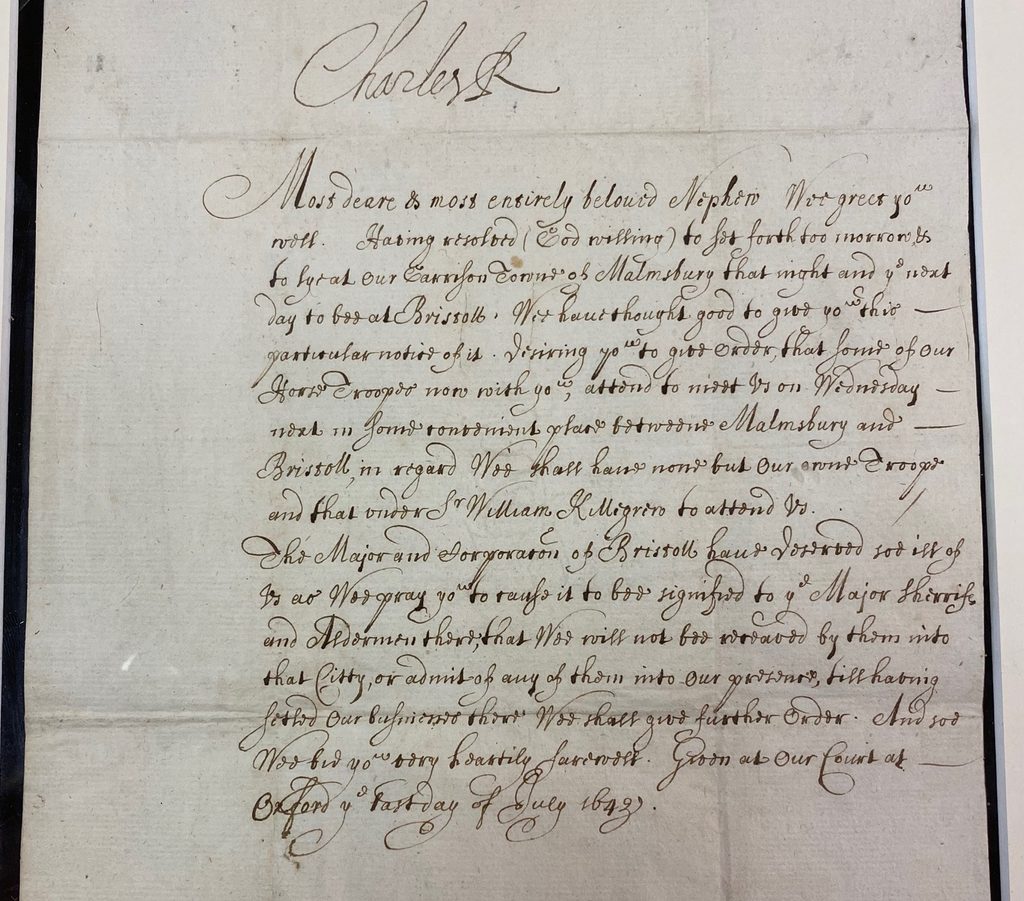
King Charles made his second visit to Malmesbury around the end of July 1643 and requested Rupert to ‘Send a troop of horse to attend me’. He was en route to Bristol via Malmesbury after he heard that he now had both locations in his hands. In the museum’s collection we have a letter from the King relating to this visit.
The Royalists appointed William Howard, Earl of Suffolk and owner of Charlton Manor to be the Governor of Malmesbury. After this the town was left nominally in the hands of the King and was undisturbed for a year.
The Final Assault by Colonel Massey and the Devereux Regiment
The King held Malmesbury until 25 May 1644 when Colonel Edward Massey captured the town for Parliament. Massey was the Governor of Gloucester all throughout the Civil War. He first took Beverstone Castle just outside Tetbury then moved against Malmesbury.
Massey marched down with his whole army from Tetbury. Marching through Westport the outskirts of the town were soon captured. However, after a Royalist counter attack Massey assembled his forces at the Bar on Abbey Row and began the attack in earnest. Resistance crumbled and Howard’s troops soon fled and many were taken including Howard and his two sons.
Malmesbury was back in Parliament’s hands and to the relief of the townspeople this time parliament was determined to and did hold it for the rest of the war.
Massey appointed Colonel Devereux to be commander at the garrison and he remained in post until the garrison was disbanded in the late summer of 1646. Indeed, it was the last garrison town in Wiltshire.
Before then the war raged round Malmesbury, sometimes parliament was in the ascendancy at other times the King. Malmesbury citizens submitted two petitions on the lack of protection they received from the garrison. One probably in 1643 and the other in 1645. They pointed out that they gladly paid in money and goods for the upkeep of the garrison but the soldiers were lazy and drunk a lot of the time. The garrison was not able to protect their property or land from Royalist attacks. One of these petition of complaint is in the museum’s collection.
Finale
At the end of 1646 Oxford was taken by Parliament, the King captured and so the Civil War came to an end.
The museum has on display a copy of the “Birds-eye View” of the town, dated 23rd October 1646, this being the day work started to demolish the town walls. The original of this remarkable image is owned by the Warden and Freemen.

After a trial at which he was admired for his bearing and courage King Charles I was executed at Whitehall Palace on 30th January 1649.