The museum’s collection contains several documents dating from the period of the Civil War.
A Petition sent by the inhabitants of Malmesbury complaining of their treatment.
This Petition was probably written in 1643. In addition, the museum’s collection contains a copy of a magazine article, dated 1830, that explains how this rare document has survived, and it includes a full transcript of the Petition.
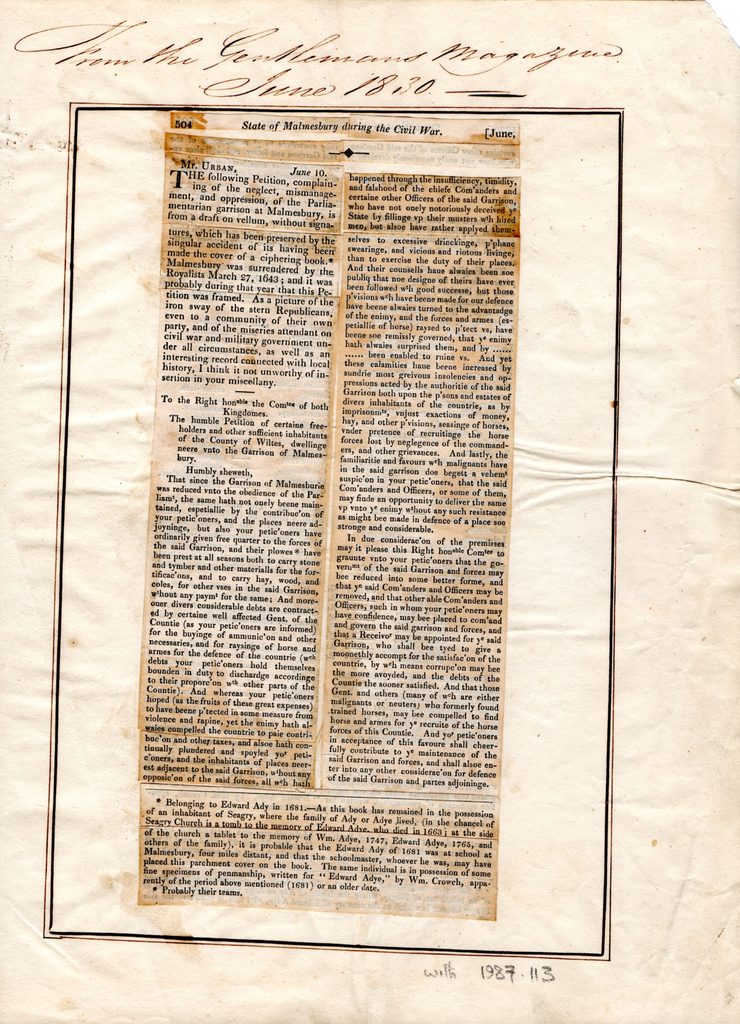
The introduction says:
The following Petition, complaining of the neglect, mismanagement, and oppression, of the Parliamentarian garrison at Malmesbury, is from a draft on vellum, without signatures, which has been preserved by the singular accident of its having been made the cover of a ciphering book. Malmesbury· was surrendered by the Royalists March 27, 1643; and it was probably during that year that this Petition was framed. As a picture of the iron sway of the stern Republicans, even to a community of their own party, and of the miseries attendant on civil war and military government under all circumstances. as well as an interesting record connected with local history, I think it not unworthy of insertion in your miscellany.
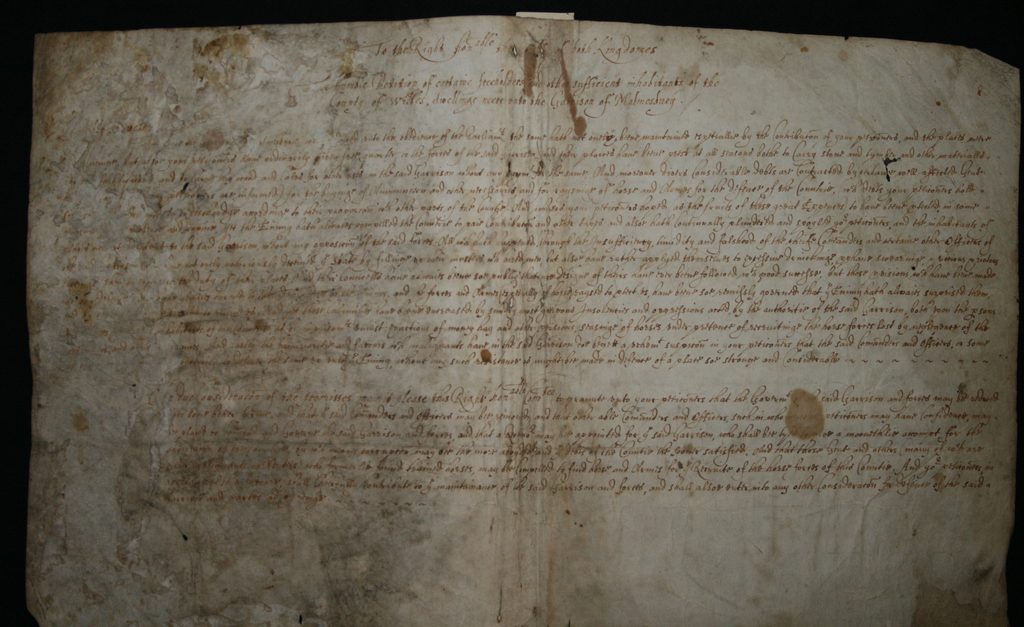
Transcript
To the Right honable the Comtee of both Kingdomes.
The humble Petition of certaine freeholders and other sufficient inhabitants of the County of Wiltes, dwellinge neere vnto the Garrison of Malmesburie.
Humbly shewet,,
That since the Garrison of Malmesburie was reduced voto the obedience of the Parliamt, the same hath not onely beene maintained, espetiallie by the contribuc’on of your petic’oners, and the places neere adjoyninge, but also your petic’oners have ordinarily given free quarter to the forces of the said Garrison, and their plowes have been prest at all seasons both to carry stone and tymber and other materialls for the fortificac’ons, and to carry hay, wood, and coles, for other vses in the said Garrison, w’hout nny paymt for the same; And moreouer divers considerable debts are contracted by certaine well affected Gent. of the Countie (as your petic’oners are informed) for the buyinge of ammunic’on and other necessaries, and for raysinge of horse and armes for the defence of the countrie (wch debts your petic’oners hold themselves bounden in duty to dischardge accordinge to their proporc’on wth other parts of the Countie). And whereas your petic’oners hoped (as the fruits of these great expenses) to have beene p’tected in some measure from violence and rapine, yet the enimy hath alwaies compelled the countrie to paie contrbuc’on and other taxes, alsoe hath con tinually plundered and spoyled yor petic’oners, and the inhabitants of places neerest adjacent to the said Garrison, wthout any opposic’on of the said forces, all wch hath happened through the insufficiency, timidity, and falshood of the chiefe Com’anders and certaine Officers of the said Garrison, who have not onely notoriously deceived ye State by fillinge vp their musters wth hired men, but also rather applyed themselves to excessive drinckinge, p’phane swearinge and vicious and riotous livinge, than to exercise the duty of their places. And their counsells haue alwaies been soe publiq that noe designe of theirs have ever been followed w’h good successe, but those p’visions wch have beene made for our defence have beene alwaies turned to the advantadge of the enimy, and the forces and armes (espetiallie of horse) raysed to p’tect vs, have beene soe remissly governed, that ye enimy hath alwaies surprised them, and by …… been enabled to ruine vs. And yet these calamities haue beene increased by sundrie most greivous insolencies and oppressions acted by the authoritie of the said Garrison both upon the p’sons and estates of divers inhabitants of the countrie, as by imprisonmts, vnjust exactions of money, hay, and other p’visions,·seasinge of horses, vnder pretence of recruitinge the horse forces lost by neglegence of the commanders, and other grievances. And lastly, the familiaritie and favours wch malignants have in the said garrison doe begett a vehemt suspic’on in your petic’oners, that the said Com’anders and Officers, or some of them, may finde an opportunity to deliver the same vp vnto ye enimy w’hout any such resistance as might bee made in defence of a place soe stronge and considerable.
In due considerac’on of the premisses may it please this Right honable Comtee to graunte vnto your petic’oners that the governmt of the said Garrison and forces may bee reduced into some better forme, and that ye said Com’anders and Officers may be removed, and that other able Com’anders and Officers, such in whom your petic’oners may have confidence, may bee placed to com’and and_govern the said garrison and forces, and that a Receivor mav be appointed for ye said Garrison, who shall bee tyed to give a moonethly accompt for the satisfac’on of the countrie, by wch means corrupc’on may bee the more avoyded, and the debts of the Countie the sooner satisfied. And that those Gent. and others (many of wch are either malignants or neuters) who formerly found trained horses, may bee compelled to find horse and armes for ye recruite of the horse forces of this Countie. And yor petic’oners in acceptance of this favoure shall cheerfully contribute to ye maintenance of the said Garrison and forces, and shall alsoe enter into any other considerac’on for defence of the said Garrison and partes adjoiniuge.
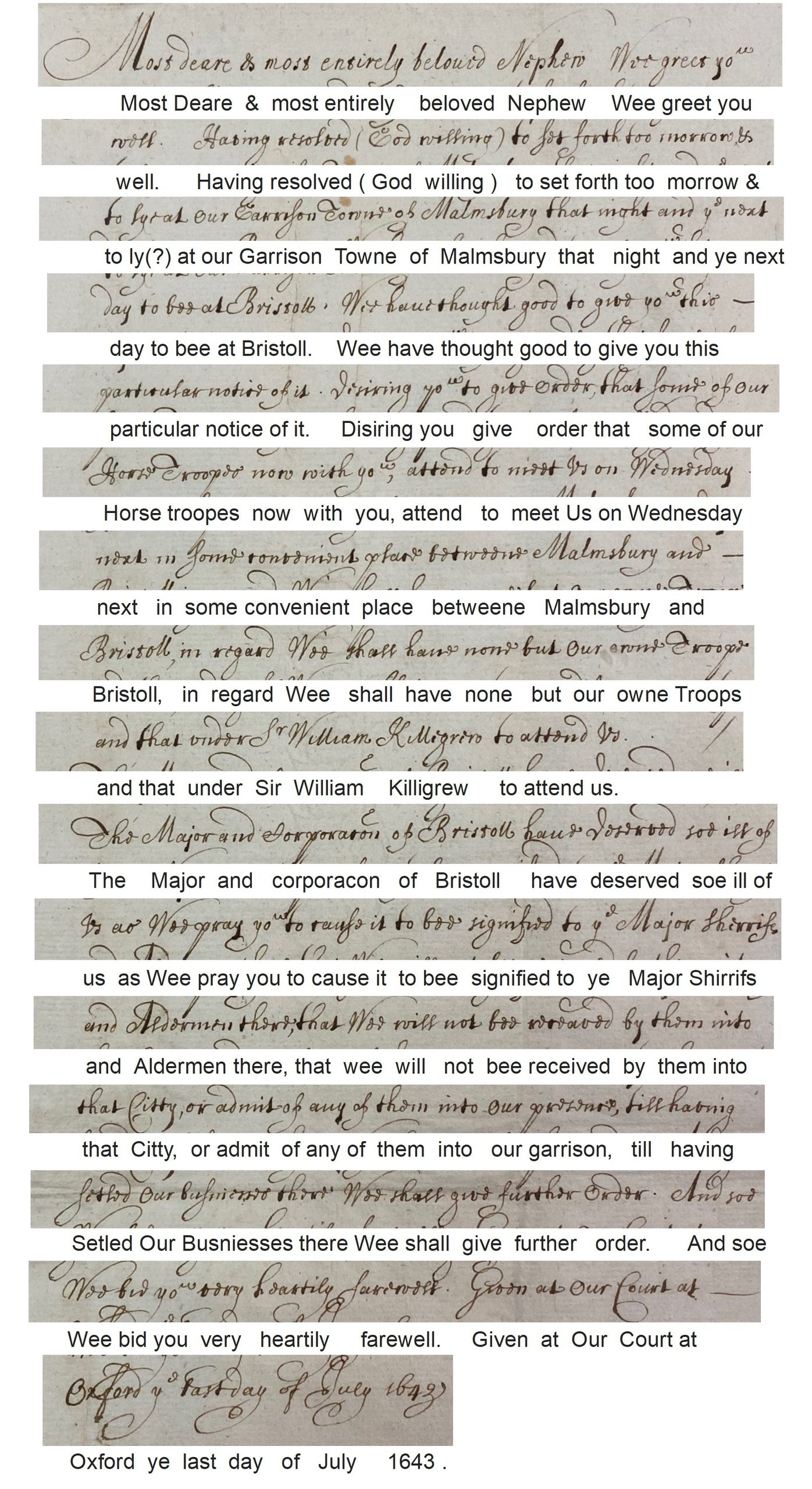
Letter from King Charles I to his nephew Prince Rupert
This letter from King Charles I to his nephew Prince Rupert informs him of his intention to travel to Bristol spending a night in Malmesbury on the way. He asks Rupert to deploy some of his troops for his protection. The letter was sent from Oxford on July 31st 1643 and includes the King’s autograph and paper seal bearing the royal arms.


Transcript
Military Letters
The collection contains three letters between military commanders relating to the progress of the war.
In 1752 the country changed from the Julian calendar to the Gregorian calendar and thus in 1642 the new year started on March 25th. These three letters are all dated before March 25th, so are before the new year. Following the change to the Gregorian calendar the year started on 1st January and thus this period is known as 1643. This explains the apparent discrepancy between these letters and the general account of the events.
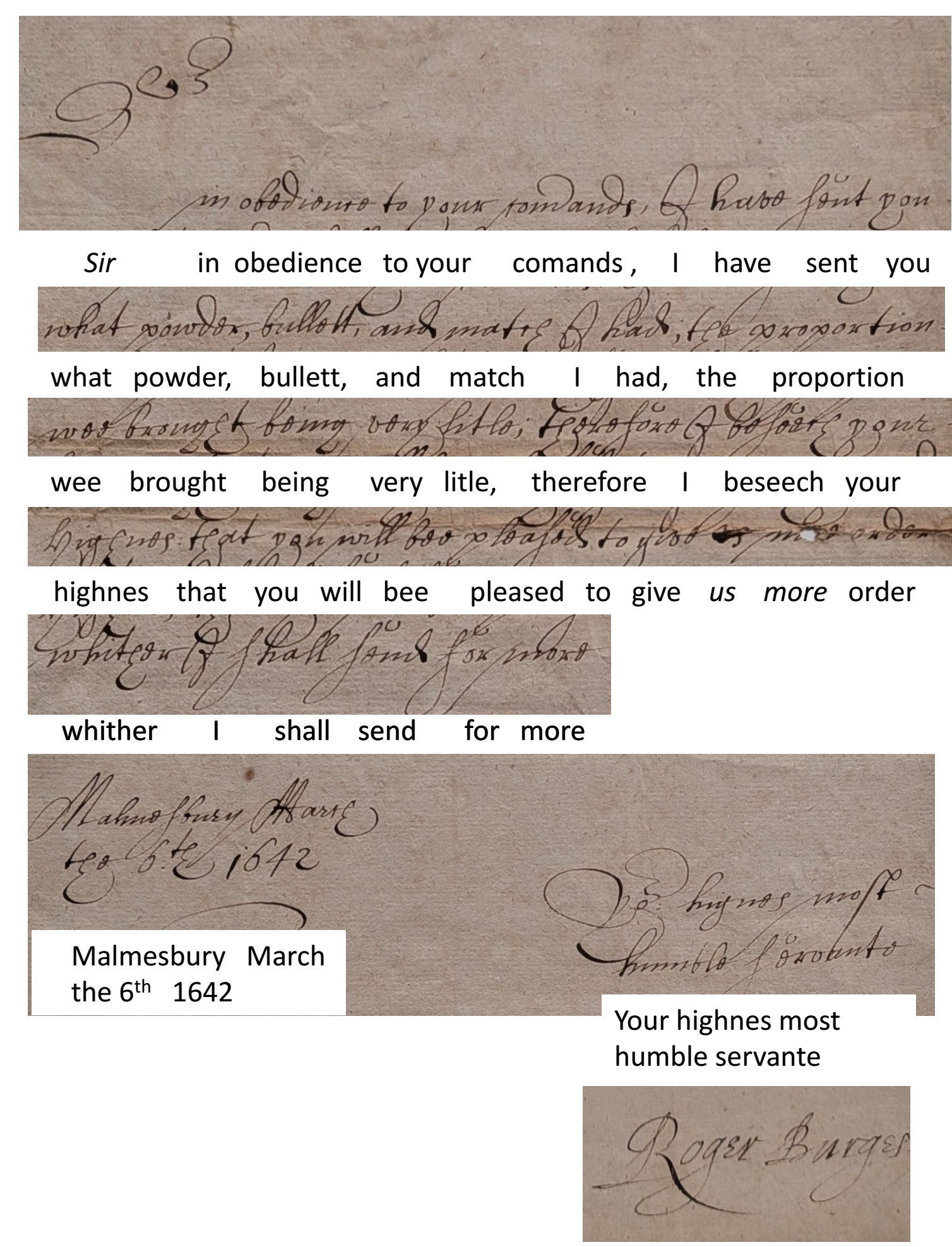
Letter dated 6th March 1642
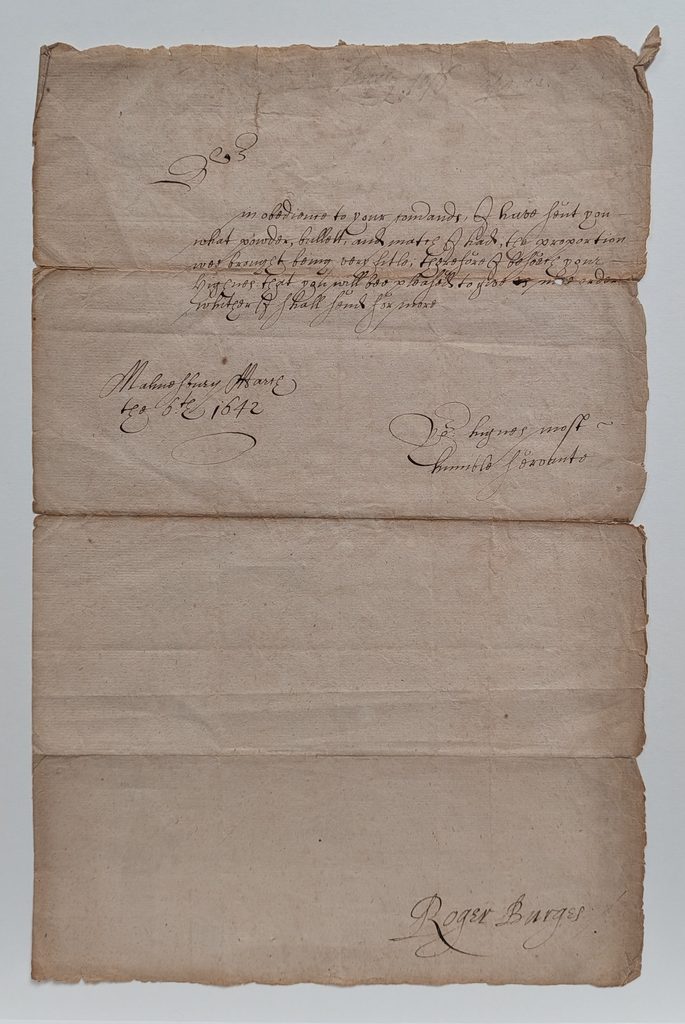
This is a letter to Prince Rupert from Roger Burgess, Governor of Malmesbury.
He is asking for more ammunition for his troops.
Transcript
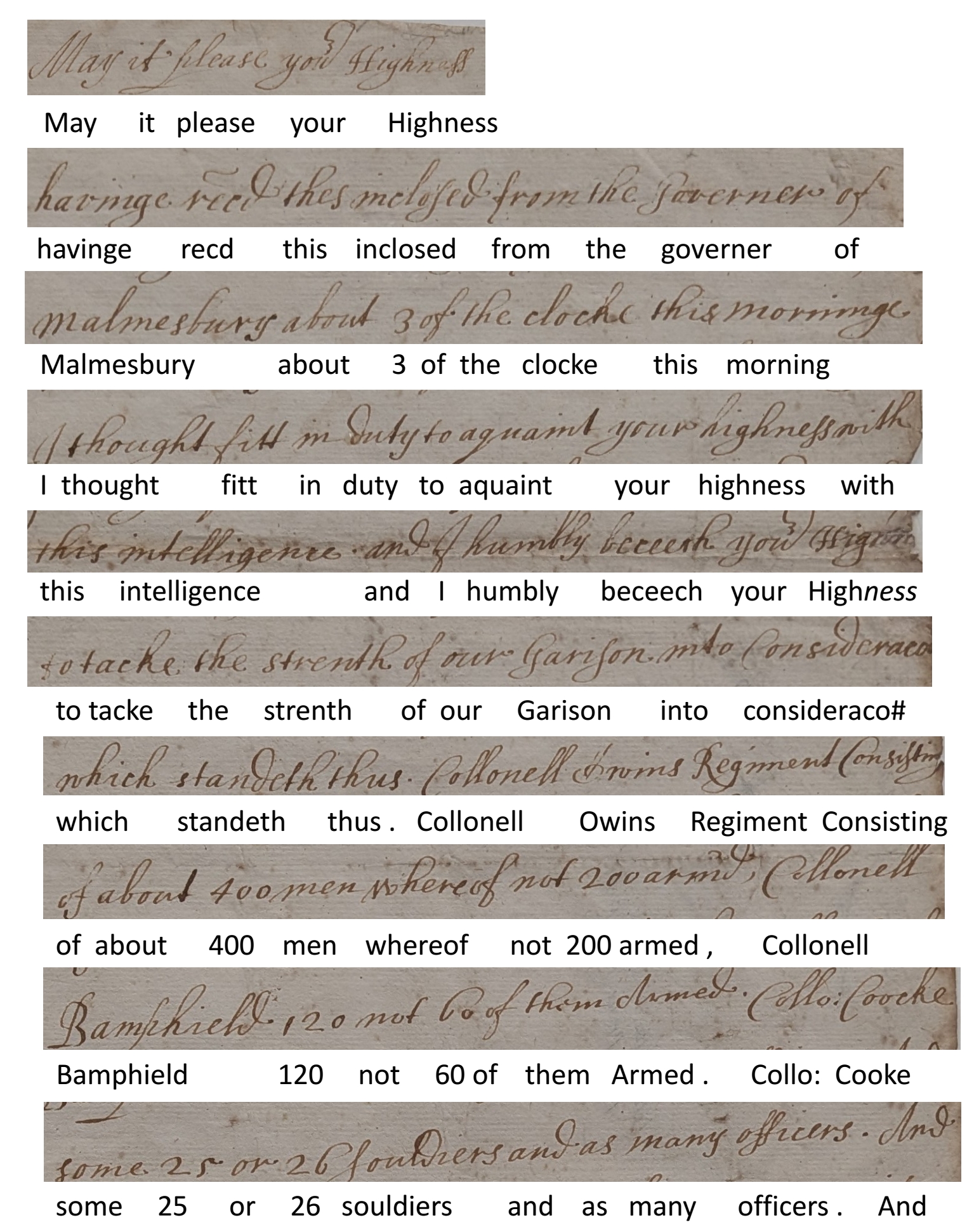
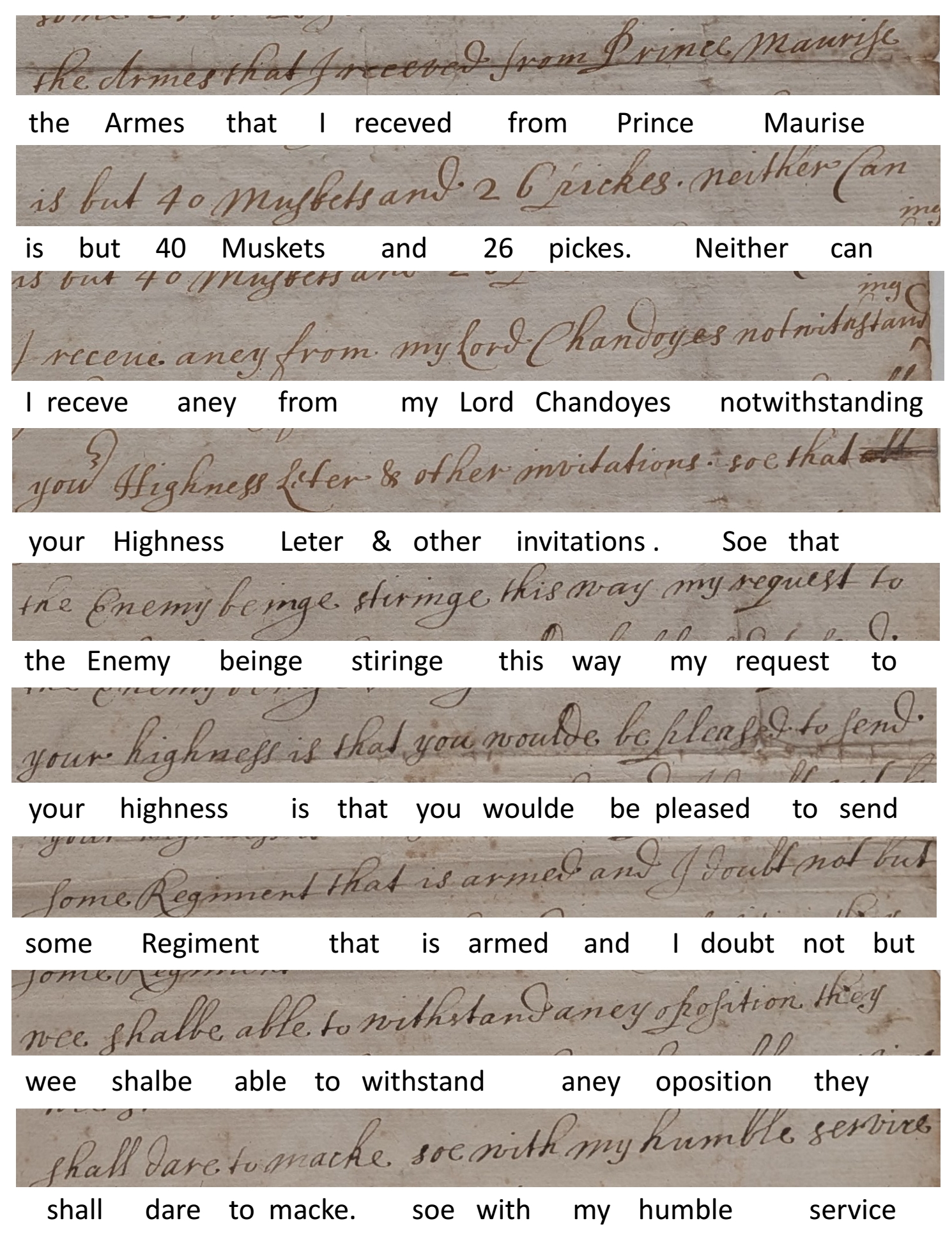
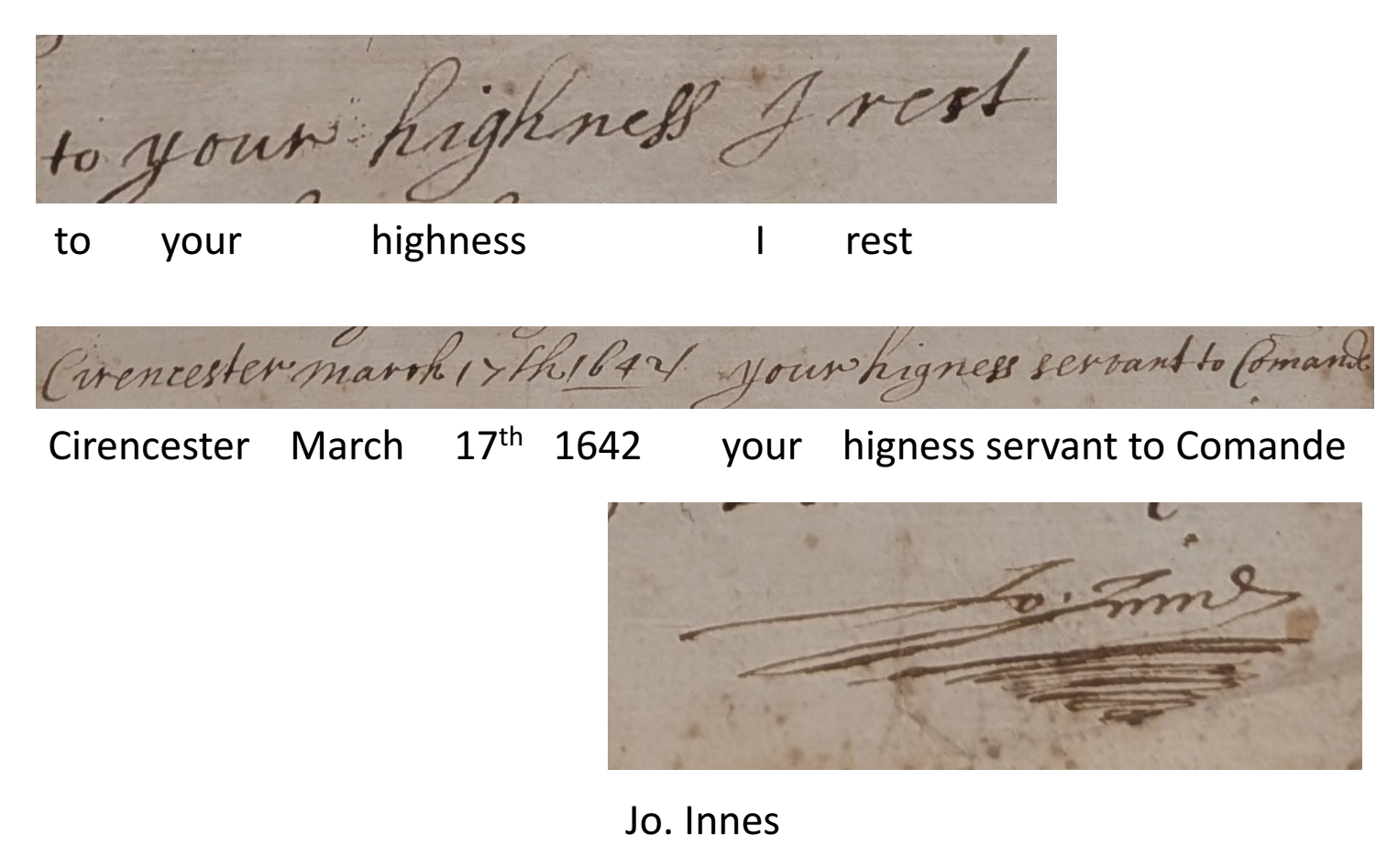
Letter dated 17th March 1642
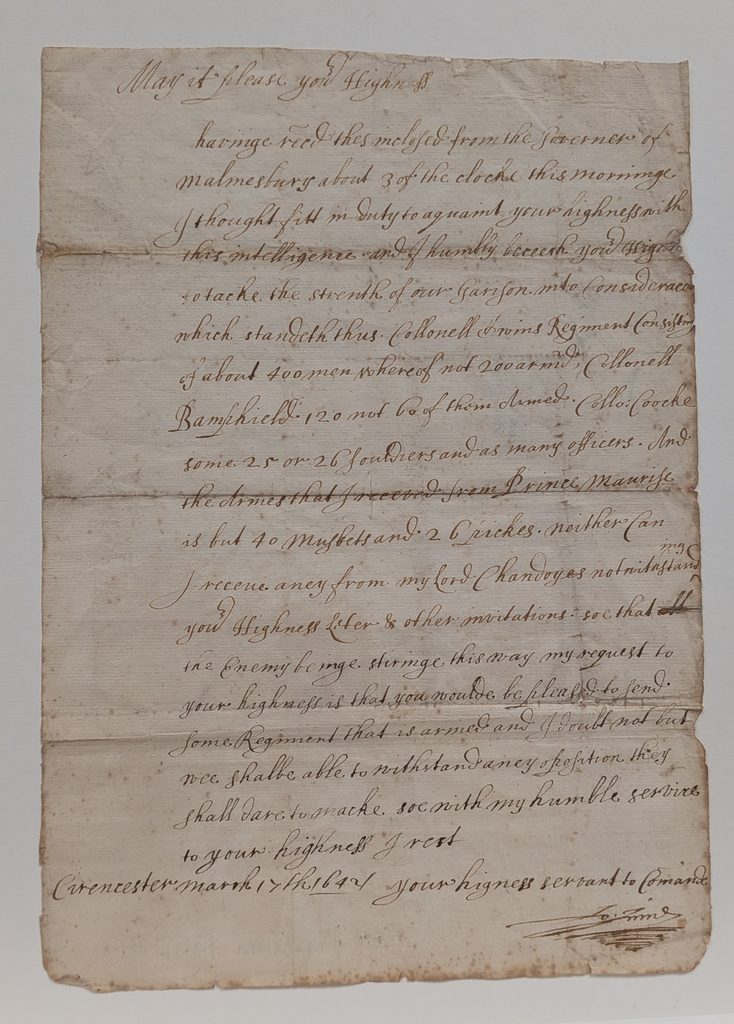
This is a letter to Prince Rupert from John Innes, Governor of Cirencester.
It details the forces he has available and asks for further reinforcements due to the imminent approach of the parliamentary forces.
The preceding letter was apparently sent together with this letter, presumably to emphasise the need for more arms in the locality.
Transcript
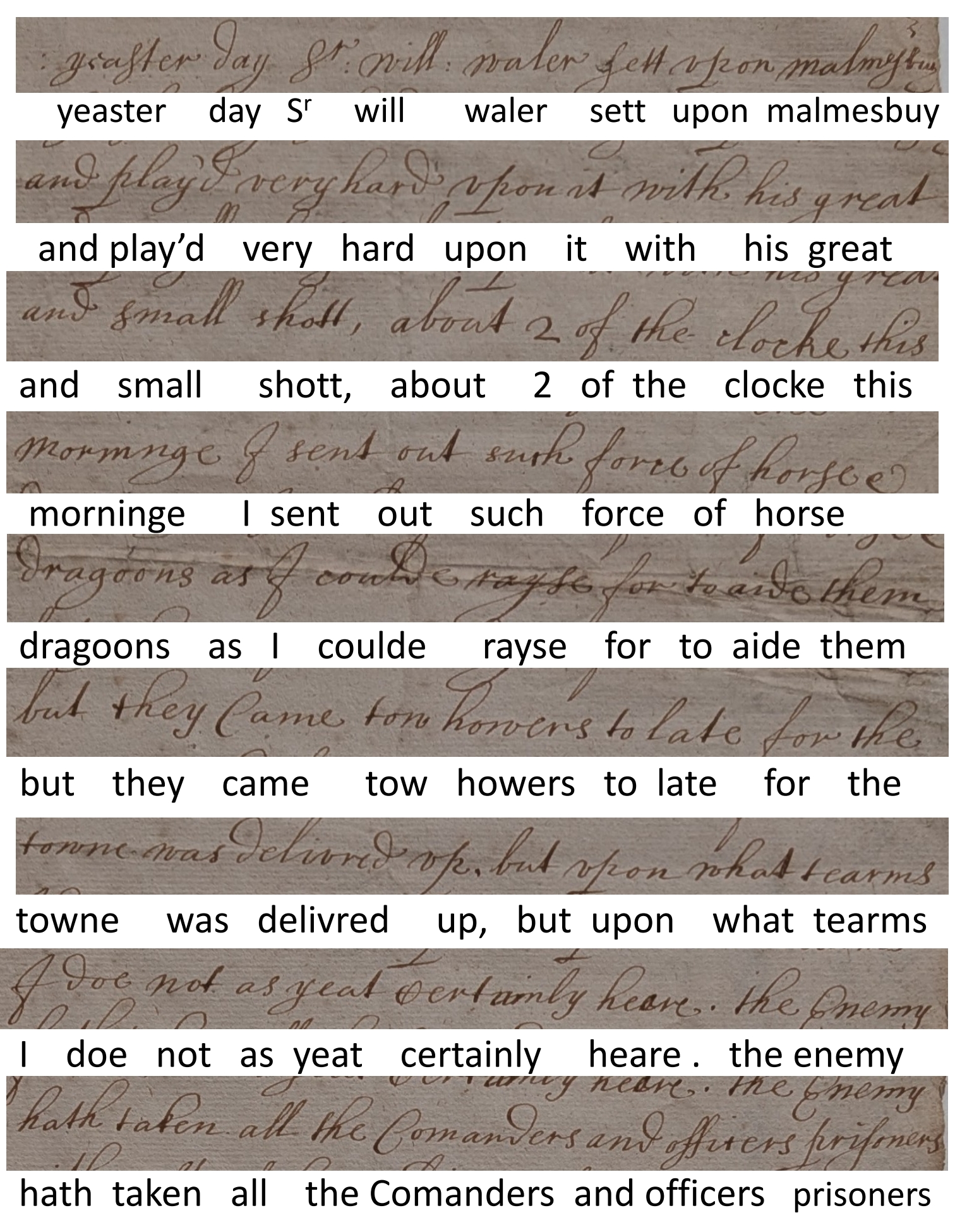
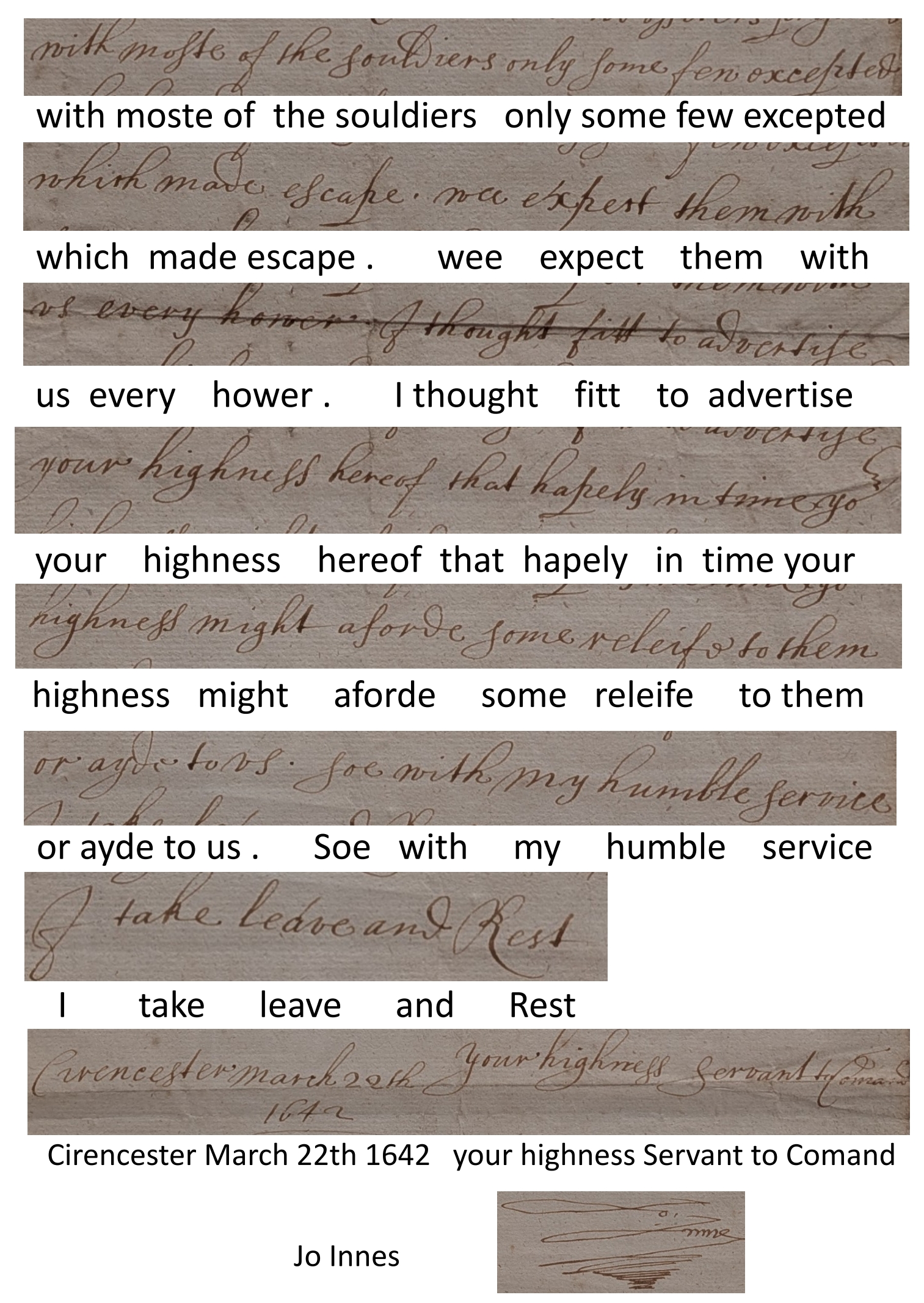
Letter dated 22nd March 1642
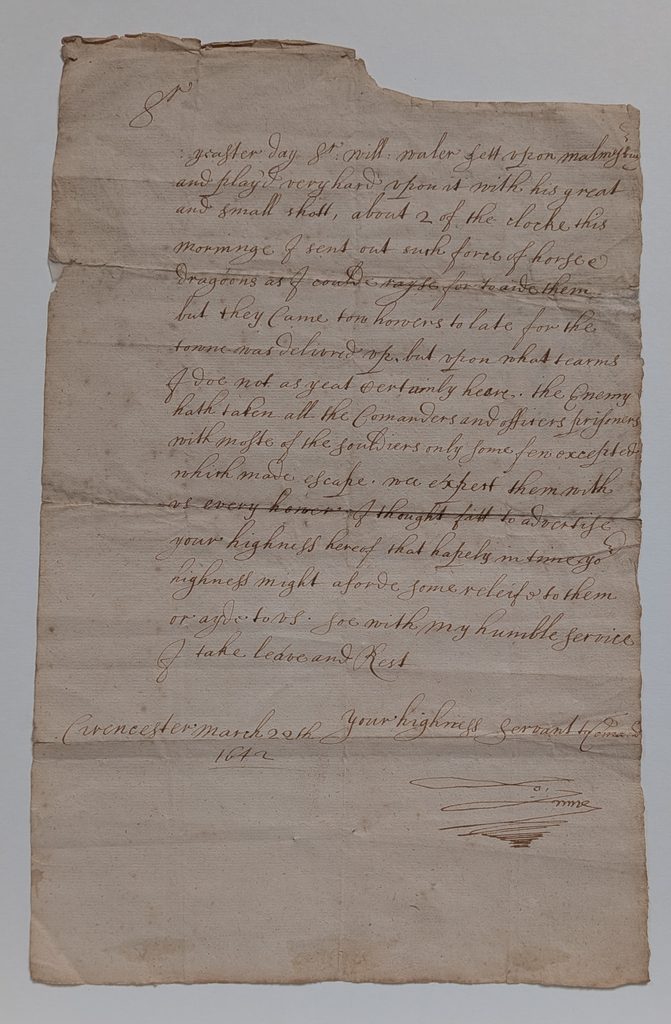
This is a letter to Prince Rupert from John Innes, Governor of Cirencester relaying news of capture of Malmesbury by Sir William Waller’s parliamentary forces, and is asking for some aid in respect of the Royalist forces now held prisoner.
Transcript